Showing posts with label News Media. Show all posts

Wednesday, September 23, 2009

One-Paper Town?


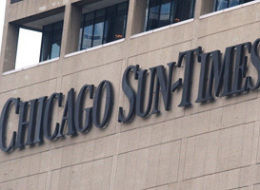
Chicago is coming dangerously close to becoming a one-paper town. Chicago financier Jim Tyree has made a $25 million offer, but union members say concessions needed to seal the deal are too much.

If things don't change soon, Chicago will become a one-paper town. And that's shame. Lots of good thinking people left the Chicago Sun-Times when Murdoch took over, and they never came back even though that was years ago.

But still the Sun-Times, small, scrappy finds its way to stories that nobody else seems to find. Case in point the recent pension stories or a lovely piece that Dave Roeder did just today on re-development plans in Englewood.

Neither paper is what it used to be, but we still need them both.

submit chicago news to the windy citizen

Thursday, September 3, 2009

Google News Puts "Spotlight" on In-Depth News

Google News has added a new section that highlights “in-depth pieces of lasting value.” Called Spotlight, and like the rest of Google News, the stories are selected by an undisclosed algorithm. The Spotlight seems to shine on longer features that have bounced around blogs for a few days. Lifestyle and opinion pieces seems to appear often, and The New York Times is a frequent source.

In this era of "fast news" - I'm curious to see if readers will flock to the Spotlight.


submit chicago news to the windy citizen


Monday, August 24, 2009

A New Reporter I'd Love to Work With

Damon Weaver has interviewed politicians and celebrities alike, yet is only 11 years old. Dubbed the "Future of Journalism", Weaver has become a viral superstar for the interviews he conducted for his elementary school's station, KEC-TV. His fame has already landed him a college scholarship and appearances on CNN, FOX and MSNBC.

Recently, he sat down with President Obama. When asked by Time Magazine about his expereince with the President, he remarked:
He was a very nice, tall guy. And he gives very good details. I liked interviewing him. He's just like a normal person.
You can check out the interview in its entirety here.


submit chicago news to the windy citizen


Wednesday, July 22, 2009

Politics in Color: Sources for "Race-Based" News


Among the usual talking heads that dominate news circuits, very few are people of color.

However since the election, more African-American and Latino pundits and scholars are offering their take on the political scene. The blogosphere is also bubbling with commentary from a race-based perspective.

In this era of Obama and Sotomayor, we should examine how our new multicultural political leaders impact future policies and society as a whole. A few of my choice sources for "race-based" news after the jump.


submit chicago news to the windy citizen


Click here for more!


Danielle Belton, provides her daily take on politics and pop culture as the self-proclaimed "The Black Snob." I can't get enough of her hilarious and often spot-on commentary on the Obamas in the White House. A must read!

Many of us in Chicago know Roland Martin from his days editing the Chicago Defender, but Roland hit the national scene during last year's election as a regular on CNN. He's due with his own show Washington Watch with Roland Martin on TV One this fall, focusing on African-American issues.

@UrbanJibaro fills my Twitter feed with fascinating links and info on the urban Latino community. From cultural trends to what the Sotomayor nomination means to young Latinas everywhere, blogger George Torres brings a unique voice to the online world and encourages other Latinos to join the dialogue.

Ester Cepeda, Chicago's first Latino metro columnist, chronicles immigration, education, and other topics of importance to Latinos at her blog, 600 Words. She recently featured 10 Latinos making a difference, to give props to Chicago Latinos always being left out of mainstream publications’ "Who’s Who" lists.

So these are the folks I'm checking out these days - give 'em a visit and let me know what you think in the comments section.

Friday, July 17, 2009

Tribune Gets Into User Generated News


Check out this new feature of the Chicago Tribune. Select your town, write your own local story and then post it, with pictures, to the site. It includes tips for writing and even editorial assistance.

Though the site looks neat and works well, there is a disturbing problem: Neither Chicago or do many of the predominantly African American suburban communities appear to be options on the click down menu for choosing the city you want to report from.


Can it be possible that the Tribune is only soliciting stories from predominately white communities? What am I missing?

submit chicago news to the windy citizen


Tuesday, June 16, 2009

Best News Source on Iran

I've read Andrew Sullivan for years and thought his blog was a terrific place to listen in on discussions for many of the issues I am interested in.

But he has outdone himself with the Iranian situation. One of his strengths is that a lot of interesting people write in to him and he posts comments from a lot of sources.

He has become the go to aggregator for all news Iranian right now -- an especially important role now that all of the media have been kicked out.

Check out this example and then keep reading. I guarantee you that you will find something interesting.

submit chicago news to the windy citizen


Tuesday, May 5, 2009

Expect Fewer Cameras At Your Press Event


Four the city's five major television news departments have reached an agreement to share a pool of two cameras for news events. News reports say that WMAQ (5), WGN (9), WFLD (32) and WBBM (2) made the decision in order to cut costs. WLS (7) opted out.

It looks like those seeking news will call a special managing editor for this camera pool, but the details have not been released yet.

Looks like the days of standing up at a press event in front of 5 or even 7 cameras is over.

submit chicago news to the windy citizen

Friday, May 1, 2009

How to manage media at your big event: Different journalists, different needs

One of VDC's most interesting clients is The Chicago Council on Global Affairs, who bring world leaders and leading thinkers to Chicago. Since they do so many programs about so many topics, we work with a wide range of local, national, ethnic, business, and foreign press on any given day.

These busy past couple weeks are a good example. VDC managed press for addresses by Former UK PM Tony Blair and Chinese Minister of Commerce Chen Deming, and a panel discussion on the Financial Crisis featuring Caterpillar CEO James Owens.

These events attracted very different groups of journalists with their own needs - communicators who find themselves working in press situations like this should try to anticipate them and adapt accordingly. More after the jump.

submit chicago news to the windy citizen


Click here for more!


Two things to do for any event that could be attended by a variety of press are:
  • Try to get RSVPs from press by including language encouraging or requiring them in your press materials. This will help you plan your event and keep interested media abreast of changing event or security situations.
  • Make sure you are properly staffed. One person dedicated to 4 camera crews, 10 writers, 3 radio reporters, and 8 photographers won't cut it. Recruit staff or volunteers dedicated to managing the media at your event.
A major world leader such as a current or former head of government or head of state (HOG/HOS, as they are known in the business) like Tony Blair come with a lot of rules - security, protocol, etc. Many media people don't enjoy rules, but if you are up front about them and maintain constant communications before and during the event, they are usually more amenable. HOG/HOS events can attract a lot of attention from a wide range of press outlets - three in particular are good to consider:
  • Camera crews for local and national stations need space, light, and decent sound to get the footage they need. If you are expecting camera crews to your large event: create a space or press riser for them to set up, make sure the lighting of your stage or podium is not dim, and reserve a mult box and hook into the PA system (most hotels have this in-house).
  • Wire photographers, who take photos for services like Getty Images or Associated Press, want good, iconic shots of leaders that can be used in current and future stories about that person, so they want to get very close to the speaker and, since they are used to fighting for shots in tightly-packed throngs of photographers and camera crews, they can be pretty aggressive. If you expect wire photographers at your event, create space for them in the floor plan where they can get their shots without disturbing your audience. If that isn't possible, set rules before the event and make sure they know you will work with them as best you can to get them to the angles they need.
  • "Fakers" - sort-of-journalists who just come to your event as media to get in free or to get a better seat - are a complicated set. They'll come with a beat up old business card from their cousin's suburban ethnic paper that hasn't been published in two years and expect the same treatment and access as The New York Times. You want to be open-minded and helpful to all media, but you don't want these folks to take time and space from real press and, in a HOG/HOS situation, you don't want to comprimise security protocols. To deal with Fakers, establish clear identification rules (ex: must have photo ID and business card from currently published organization) ahead of time and include them in press materials - this will filter out many of the more egregious cases.
Some foreign leaders, like the Chen Deming of China or some HOG/HOS speakers, bring their own press corps as well as attracting local ethnic press.
  • Local ethnic press are usually excited for the opportunity to speak with an important person from their native country or region, but sometimes aren't as professional as some of the major media. Give them all the opportunities you can for access and make sure they have all press materials so they get all the details right.
  • Foreign press corps follow their subject around the world for weeks in a very controlled environment, looking for any nugget they can to send home. They will usually totally ignore prepared remarks and look for an opportunity to rush the stage or ambush the speaker, which will encourage the domestic press you're working with to get that access. They also usually don't speak a lot of English (or looking at it another way, you don't speak their language). Try to establish good contact with the local consulate or other representatives of the speaker to gauge how many press people are coming and how they will fit into the structure of the event. When surprised by a large, aggressive group, try to bend, not break - mitigate the chaos, because you aren't going to stop it.
The words of a speaker or panel of speakers who are prominent in the business and financial world, like representatives of The Fed or a CEO of a major international company, can be important and timely - business writers for wires and bureaus need to get the information out quickly.
  • Wire reporters for outlets like Reuters or Bloomberg want to update stories by the minute. Make sure you have electrical outlets and if possible, internet access available if you are expecting these types of journalists. They may want to write, post, and update their stories on their laptops during the event.
When you find yourself if a big-time media situation, knowing who's who can help you help the press while keeping the event pleasant and your VIPs happy.

(photo from Associated Press via LA Times)

Thursday, April 30, 2009

WindyCitizen Deal With CBS2 Website May Be Wave of the Future


CBS2 now prominently hosts a feed from WindyCitizen on the front page of the local section of its web site.

This is a good example of how MSM (mainstream media) is creating partnerships with smaller players to obtain content that they don't have the resources to gather.

WindyCitizen is a "reader-edited" news site where anyone can recommend, rate and discuss local news.

WindyCitizen gives CBS2 a granularity to their coverage that they can't get on their own, and is a good example of how organizations can work their way up the media food chain by posting on sites like WindyCitizen.

Thursday, April 23, 2009

How Well Do the Media Cover NonProfit Issues?


NP Communicator, a blog published by Community Media Workshop (CMW), is conducting research on the future of local news in Chicago. The chart on the right is from a survey of selected keywords in Chicago Tribune and Sun-Times news articles over the years. (Click on the chart to enlarge it and see the keywords)

Tribune Cuts: Naming Names

Chicago Reader's Michael Miner has names of the 53 cuts at Tribune.

Monday, April 13, 2009

Street papers growing

According to an article in the New York Times:
Newspapers produced and sold by homeless people in dozens of American cities are flourishing even as the deepening recession endangers conventional newspapers. At many of them, circulation is growing, along with the sales forces dispatched to sell the papers to passers-by.

According to the article, the current recession has brought new and, in some cases, highly skilled vendors to the industry, and the "offbeat" coverage is attracting new interest.

So don't forget to buy that copy of Streetwise when you see someone selling here in Chicago.

Chicago Fosters New Media Models


You may have received a copy of The Printed Blog at your neighborhood El stop. Another new Chicago news aggregator called Newser, is also trying to engineer a new financial model for delivering the news. According to the Sun-Times, this new company is employing 11 full-time employees (note: the article doesn't say "reporters"). Like a lot of new, news sources, it searches far and wide for content developed by others. One more news "source" that is attempting to make money by purveying a product paid for by others. It can't work in the long run. If the people who create high quality content can't make a living or profit by doing it, they it's just going to go away.

Wednesday, April 1, 2009

Part of the Problem?

The Colbert ReportMon - Thurs 11:30pm / 10:30c
Better Know a Lobby - Newspaper Lobby
comedycentral.com
Colbert Report Full EpisodesPolitical HumorNASA Name Contest

I was rooting for this spokesperson for the newspaper industry, but I ended up cringing

New study: Supportive housing - pay now, not later


In this tough fiscal climate, state services are feeling the pinch as more people need their help. But Illinois could save millions of dollars from the most expensive users of public services with more supportive housing, according to a new report released today by Heartland Alliance Mid-America Institute on Poverty (MAIP) and Supportive Housing Providers Association (SHPA).

More on the study and news coverage of the release after the jump...


Click here for more!


What is supportive housing? It's affordable housing coupled with supportive services for the homeless, mentally ill and other distressed populations. There are currently 6,000 supportive housing units in 28 Illinois counties.

Today's report found an overall 39 percent cost reduction in the use of state public services from a sample of 177 supportive housing residents. That translates to more than $850,000 - an average saving of $2,400 per resident per year.

And MAIP acknowledges that's not the full scope of savings. Based on other national studies, the cost savings per resident could be more than 7 times higher than the $2,400 figure.

VDC publicized the report's findings, which appeared in stories by the Associated Press and Chicago Public Radio. You can also check out what Google News has picked up here.

Image via
United Property Tax Consultants

Friday, March 20, 2009

The Danger of a Paperless News Media


At a time when the President consistently urges us to topple the barriers that divide the nation, Nicholas Kristof of the NY Times claims that the demise of traditional newspapers is reinforcing the ideological segregation of America.

Thursday, March 19, 2009

Leaving Newspapers You Can Hold Behind Part I

Many people who grew up loving newspapers can't get used to the idea that their news might not come in the form of a paper that they spread out on the breakfast table every morning.

I can understand that. My father read Mike Royko aloud to my mother at night while she fixed dinner, and my love affair with newspapers and the worlds they could open me up to started there. Over the years I came to love the wide variety of information a newspaper could provide. Somewhere along the way in my 30s I decided I wanted to understand the world of business and finance. I used the business pages of newspapers as my textbook, wading through articles I barely understood, until, little by little, I gained a basic understanding basic financial concepts.

Click here to read more!

I always thought of the newspaper as the average person's college -- a place where, if you spent the time, you could learn something about anything you really wanted to know about and at very little cost.

Best of all a good deal of the joy came from the way a newspaper could unexpected introduce me to new and fascinating information that I had no idea I wanted to know about.

Though I still read print newspapers on the weekdays, it's mainly because they come to my office that way. At home, my Sunday morning routine now begins with me settling into my easy chair with my cup of coffee and Google news on my laptop.

And, you know what? It's better. The variety of news and information is so vast. I started really understanding this during the Obama campaign, when I, like everyone else, was searching everyday (multiple times) online for some new scrap of information that would show we were winning.

That activity opened me up to numerous new information sources and the wide variety of content available online -- much more than a newspaper could ever provide and much more varied.

Yes, you can't spread the online world out on the table, but, if you have a laptop -- and that's essential -- you can enjoy it from an easy chair.

I'm not a tech geek, but my next post will tell you what I think are the basics for shifting over to an online news world. It's really not that hard.

Monday, March 16, 2009

The State of the News Media 2009

The Seattle Post Intelligencer publishes its last print issue on Tuesday. The Rocky Mountain News is no more. These are two venerable publications that I never thought I would see disappear in my lifetime.

It's a good time to read a new report from the Pew Project for Excellence in Journalism, The State of the News Media: An Annual Report on American Journalism.

Here's a taste:
Newspaper ad revenues have fallen 23% in the last two years. Some papers are in bankruptcy, and others have lost three-quarters of their value. By our calculations, nearly one out of every five journalists working for newspapers in 2001 is now gone, and 2009 may be the worst year yet.
In local television, news staffs, already too small to adequately cover their communities, are being cut at unprecedented rates; revenues fell by 7% in an election year—something unheard of—and ratings are now falling or are flat across the schedule. In network news, even the rare programs increasing their ratings are seeing revenues fall.
Now the ethnic press is also troubled and in many ways is the most vulnerable because so many operations are small.
Only cable news really flourished in 2008, thanks to an Ahab-like focus on the election, although some of the ratings gains were erased after the election.
Perhaps least noticed yet most important, the audience migration to the Internet is now accelerating.